Cosette's mother
Les MisérablesCosette's mother is a poor young woman whose maternal devotion gives a human face to the social hardship that shapes her life. After entrusting her daughter to the Thénardiers so she can seek work, she spends her remaining strength trying to meet their demands. Her story moves from separation and sacrifice toward a final, unanswered question about Cosette.
Identity and Circumstances
When she appears with Cosette, Cosette's mother is described as young, pale, exhausted, and unwell. Her clothing marks both poverty and a former rural life: she wears a coarse brown wool cloak, a plain linen dress, and heavy shoes, while a broad blue scarf covers her figure. Her hands are weathered and freckled, and her index finger has been hardened by sewing. These details establish a woman accustomed to labor, not someone with resources to spare.
Cosette sleeps in her arms with the deep trust associated with childhood. The contrast between the child's peaceful rest and her mother's worn appearance makes their dependence on one another visible before the separation begins. The narrative identifies her as a mother who has nursed her child, and her attention remains fixed on the sleeping girl. Her poverty is not presented as a lack of care: the circumstances that threaten their life together are economic and social.
Separation and the Search for Work
Cosette's mother decides to return to her native town to look for employment, but knows that having a child will make that search more difficult. As she passes an inn, she sees the two Thénardier girls playing together on a large swing. Their apparent happiness catches her attention. The scene gives her a possible solution to the immediate problem of how to work while her daughter is still dependent on her.
She asks La Thénardier to keep Cosette. The request follows a moment in which the innkeeper has remarked on how much the three girls resemble sisters; Cosette's mother seizes that opening and asks directly for help. The evidence shows the appeal and the proposed arrangement, not all its terms. What follows, however, makes the cost of separation plain: Cosette is in Montfermeil, while her mother must earn money elsewhere and communicate with the Thénardiers through payments and letters.
Wages, Debt, and Sacrifice
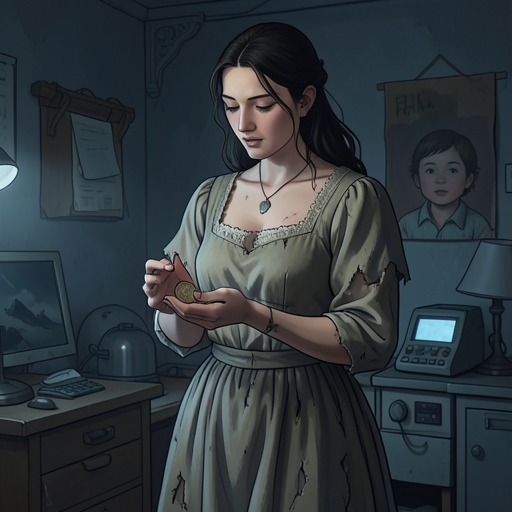
The work Cosette's mother finds does not provide enough to keep pace with her obligations. Her debts grow, and the Thénardiers repeatedly write to her. Their letters distress her, while the cost of receiving them further diminishes the little money she has. One letter claims that Cosette lacks warm clothing and needs a wool skirt, demanding at least ten francs from her mother. She keeps the letter in her hands throughout the day, then goes to a barber and sells her long blond hair.
The episode makes the connection between distant maternal care and bodily sacrifice concrete: a request for a child's winter clothing becomes the loss of a visible part of the mother's appearance. The payment does not end the demands. On another occasion she obtains forty francs after losing two teeth, then sends the money to Montfermeil. She manages to provide what is requested, but the repeated need to convert parts of herself into money shows how little control she has over the terms of her survival. Her sacrifices sustain the hope of caring for Cosette from a distance, while leaving her own condition increasingly depleted.
Illness and the Question of Cosette
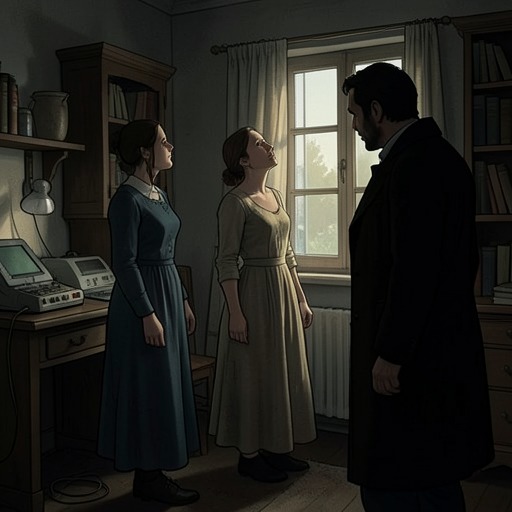
By the time she is in a sickbed, the outward signs of hardship have deepened. During the two months since Jean Valjean first came to see her in the hospital, her hair has turned grey; his, by contrast, has turned white. The parallel records the passage of time through the changes in their appearances, as they stand beside the same bed in a recurring posture of patient and visitor.
When Cosette's mother opens her eyes and sees Jean Valjean, she smiles and asks about Cosette. The question shows where her attention still rests, even in illness. It also gives the scene its central emotional tension: the daughter for whom she has repeatedly sent money is absent, and the evidence does not show her receiving the reunion she longs for.
Death and Narrative Significance
The final scene follows the arrival of Jean Valjean with Inspector Javert and a nun. Cosette's mother looks from one to the other, tries to speak, reaches out in alarm, and then collapses. She dies immediately afterward. Jean Valjean responds by freeing his hand from Javert's grasp and accusing him of having caused her death. The sequence ties her end to the confrontation at her bedside, while making clear that her hopes for Cosette have not been fulfilled in the scene.
Her trajectory links intimate maternal love to the material pressures of poverty: the search for work separates mother and child, inadequate earnings compound debt, and the letters from Montfermeil turn each appeal for Cosette's care into another demand. Her hair and teeth become measures of what she gives up to keep answering those demands. The repeated question about Cosette, first posed from the sickbed and left unresolved by her death, gathers these sacrifices into a final image of attachment that persists even when reunion is beyond her reach.